
IT vendor management is the structured practice of selecting, contracting, governing, and offboarding IT suppliers so they consistently deliver service, security, and value to your organisation. If you have cloud services from AWS, Microsoft Azure, or Google Cloud, a handful of SaaS subscriptions, and a managed services provider, you already have a vendor portfolio that needs governing. The question is whether you are governing it deliberately or hoping for the best.
Four actions you can take this week:
- Build a vendor register. List every IT supplier, their contract end date, the service they deliver, and the data they can access.
- Assign an owner to each supplier. One named person is accountable for that relationship, contract, and performance.
- Flag critical suppliers. Mark any supplier whose failure would stop your business operating or trigger a Privacy Act obligation.
- Set renewal alerts. Calendar reminders 90 days before every contract expiry prevent surprise auto-renewals and give you negotiating room.
Pro Tip: Run a quick SaaS audit before anything else. Ask your finance team for every recurring software charge on the company card. You will almost certainly find subscriptions nobody owns, tools with lapsed users still paying, and at least one service that duplicates another. That list is your shadow IT problem, and it belongs on your vendor register on day one.
ITIL 4's Supplier Management practice and Australia's Privacy Act both point in the same direction: know who your suppliers are, what data they touch, and what happens when they fail. Myitbutler helps Australian organisations do exactly that, remotely and without a long-term contract.
Key takeaways
Effective IT vendor management requires a central register, tiered governance, mapped SLAs, and a consistent review cadence to protect Australian organisations from cost, compliance, and operational risk.
| Point | Details |
|---|---|
| Build the register first | A single vendor register with named owners and renewal dates is the foundation everything else depends on. |
| Tier by criticality and data access | Strategic suppliers need monthly reviews and documented exit plans; commodity suppliers need an annual check. |
| Map SLAs before signing | Link every supplier SLA to your internal service targets so breaches can be attributed and credits claimed. |
| Privacy Act obligations apply to suppliers | A supplier data breach can trigger your NDB notification obligation, so data-handling clauses are non-negotiable. |
| Myitbutler for remote vendor liaison | Myitbutler coordinates IT vendor relationships, contract reviews, and renewals for Australian SMBs with no lock-in. |
Table of Contents
- What does IT vendor management actually cover?
- Why Australian organisations can't afford to ignore vendor governance
- What does the vendor lifecycle look like in practice?
- Best practices that keep vendor governance from becoming a burden
- Which metrics actually tell you how your vendors are performing?
- Which tools should Australian organisations use for vendor management?
- A 90-day SMB playbook for getting vendor management running
- What are the most common vendor management pitfalls?
- Strategic partner or transactional supplier: how do you decide?
- How do you report vendor management ROI to executives?
- How should you engage stakeholders during the vendor lifecycle?
- Contract negotiation tips that actually protect you with IT vendors
- What emerging trends are reshaping IT vendor management?
- What does it cost and how long does it take to implement vendor management?
- Why small Australian businesses should treat vendor management as strategic
- Myitbutler handles the vendor coordination so you can focus on your business
- Sources
- FAQ
What does IT vendor management actually cover?
IT supplier management spans every external party that delivers technology capability to your organisation: software vendors, cloud providers, hardware suppliers, managed service providers, connectivity carriers, and specialist support contractors. The scope is broader than most teams realise until something breaks.
Ownership works best as a cross-functional model rather than sitting entirely with IT. A named supplier owner in IT leads the relationship, but procurement handles commercial terms, security and compliance review data-handling obligations, and finance tracks spend and TCO. Without that cross-functional model, contracts get renewed without a security review, or a supplier quietly changes their data residency and nobody notices.
| Role | Primary responsibility |
|---|---|
| Supplier manager (IT lead) | Relationship, performance reviews, escalations |
| Contract manager (procurement) | Commercial terms, renewals, penalties |
| IT owner (technical) | Integration, SLA mapping, incident attribution |
| Security / compliance | Data-handling review, risk rating, NDB obligations |
| Finance | Spend tracking, TCO, budget alignment |
ITIL 4's Supplier Management practice treats suppliers as contributors to value streams rather than just cost lines. It draws a clear line between transactional suppliers (commodity, replaceable, low governance overhead) and strategic partners (deep integration, co-development, executive engagement). That distinction matters because the governance effort for each is completely different.
Why Australian organisations can't afford to ignore vendor governance
Australian organisations face a specific compliance layer that makes vendor governance non-negotiable rather than merely good practice. The Privacy Act 1988 and the Notifiable Data Breaches (NDB) scheme require organisations to notify the Office of the Australian Information Commissioner and affected individuals when a data breach is likely to cause serious harm. A supplier breach counts. If your payroll provider, CRM vendor, or cloud storage service is compromised and they hold personal information on your behalf, your organisation carries the notification obligation.
Supply chain risk is the operational companion to that legal exposure. A third-party outage at a critical supplier can propagate directly into your service delivery, and without a mapped underpinning contract, you cannot attribute the SLA breach or hold anyone accountable.
Unmanaged SaaS spend is the quieter cost risk. Subscription models with automatic renewals and decentralised adoption create licence sprawl fast. Teams adopt tools independently, licences accumulate, and by the time finance notices, the organisation is paying for three overlapping project management tools and a video platform nobody uses.
Pro Tip: Tier your suppliers by two factors: criticality to operations and level of data access. A supplier that is both critical and holds sensitive personal data is your highest-risk tier and deserves monthly check-ins, a documented exit plan, and a security review at every renewal. A low-criticality, no-data-access supplier can be reviewed annually.
What does the vendor lifecycle look like in practice?
A structured vendor management process moves through seven stages. Each has a clear set of actions and a realistic time estimate for an SMB or mid-market team.
- Define the need (1–2 weeks): Document the business requirement, budget envelope, integration dependencies, and data-handling expectations before approaching any supplier.
- Evaluate suppliers (2–4 weeks): Score candidates on technical fit, security posture, SLA terms, pricing and TCO, support responsiveness, and strategic alignment. For cloud services, compare AWS, Microsoft Azure, and Google Cloud on the specific workload requirements, not just headline pricing.
- Negotiate contract and SLA (1–3 weeks): Lock in SLA targets, data-handling obligations, notification periods for incidents and changes, and termination notice periods before signing.
- Onboarding (1–4 weeks): Provision access, document integration points, confirm SLA baselines, and register the supplier in your CMDB and vendor register.
- Monitor and manage (ongoing): Track SLA adherence, incident attribution, and spend monthly. Link incidents to supplier IDs in your ITSM platform so trend analysis is automatic rather than manual.
- Optimise or renew (4–8 weeks before expiry): Review performance data, renegotiate terms, consolidate licences, and confirm the supplier still meets your security and compliance requirements.
- Offboard (2–4 weeks): Revoke access, retrieve or destroy data per contractual obligations, close accounts, and document lessons learned.
Contract clause examples worth insisting on:
| Clause | What to specify |
|---|---|
| SLA target and remedy | Uptime percentage, response/resolution times, and service credits for breach |
| Data handling | Data residency (Australian servers where required), encryption standard, retention and deletion schedule |
| Incident notification | Supplier must notify you promptly of a suspected breach (aligns with NDB obligations) |
| Change notification | Minimum 30 days notice for material changes to service, pricing, or data processing |
| Termination notice | 30–90 days written notice, with data return or destruction confirmed in writing |
Best practices that keep vendor governance from becoming a burden
The organisations that manage vendors well share one habit: they treat vendor data as a first-class record, not a spreadsheet someone updates when they remember. Centralising vendor data in an ITSM or dedicated vendor management system means every team works from the same source of truth, and dashboards for spend and risk stay current without manual reconciliation.

Standardise communication channels and review cadences by supplier tier. Strategic suppliers get a quarterly business review with executive attendance. Tactical suppliers get a quarterly check-in at the operational level. Commodity suppliers get an annual review tied to their renewal date. That structure prevents the common failure where a critical supplier drifts for 18 months without a formal conversation.
Integrate supplier records with incident and change management. When a supplier causes or contributes to an incident, that link should be recorded in the ticket. Over time, that data reveals which suppliers generate disproportionate noise, which is far more useful than a gut feeling at renewal time.
For SaaS specifically, run a discovery pass every quarter. Tools like automated SaaS discovery (available in platforms such as InvGate) surface subscriptions that finance has not approved and accounts that former employees still hold. Access control and licence management are not a one-time task.
Pro Tip: Build renewals into your calendar as a recurring project, not a reactive scramble. Set a 90-day alert, a 60-day review, and a 30-day decision deadline for every contract. That cadence gives you time to negotiate, switch, or consolidate before auto-renewal locks you in for another year.
Which metrics actually tell you how your vendors are performing?
Tracking the right numbers turns vendor management from a governance exercise into a business conversation. The metrics below are measurable from your existing ITSM, finance, and contract systems.
| Metric | Why it matters | How to measure |
|---|---|---|
| SLA adherence rate | Shows whether the supplier is meeting contracted commitments | ITSM reports against SLA targets per supplier |
| Vendor-caused incidents | Identifies repeat offenders and systemic risk | Tag incidents with supplier ID in ticketing system |
| Vendor-related MTTR | Measures how quickly supplier issues are resolved | Average resolution time on supplier-tagged tickets |
| TCO and spend trend | Tracks true cost including licences, support, and overages | Finance system plus contract register |
| Contract health | Flags upcoming renewals, penalties, and gaps | Contract repository with renewal date alerts |
| Risk rating | Summarises security, compliance, and operational risk | Quarterly risk assessment per supplier tier |
For executive reporting, surface three numbers: SLA adherence across your top five suppliers, total vendor spend versus budget, and the number of open risk items. That is enough for a board-level conversation without drowning anyone in operational detail.
A practical way to detect supplier risk early is to link incidents and change records to supplier IDs in your ITSM platform. Trend analysis across those tags reveals repeat offenders faster than any quarterly review meeting.
Which tools should Australian organisations use for vendor management?
Tool selection depends on what you already have and how complex your supplier portfolio is. The categories to consider are: vendor management systems (VMS), ITSM platforms with supplier modules, IT asset management (ITAM) and CMDB tools, contract repositories, and dashboarding.
GLPI is an open-source ITSM platform with a purpose-built supplier module that links suppliers to contracts, assets, tickets, and budgets. That linkage means you can see a supplier's involvement in incidents and track contract terms and spend from a single record. It is a strong fit for SMBs that want ITIL-aligned tooling without enterprise pricing.
InvGate offers ITSM and asset management with vendor tracking, SaaS discovery, and dashboards for spend and compliance. It is available in Australia and integrates with common identity and finance systems.
For cloud infrastructure vendors, AWS, Microsoft Azure, and Google Cloud each provide native cost management and governance dashboards (AWS Cost Explorer, Azure Cost Management, Google Cloud Billing). These are not vendor management tools in the full sense, but they are the right place to track spend and usage for those specific suppliers.
A vendor management system (VMS) centralises supplier data and workflows for sourcing, onboarding, and performance monitoring. Enterprise VMS platforms exist, but for most Australian SMBs, an ITSM platform with a supplier module covers the same ground at a fraction of the cost.
Pro Tip: Before buying a new tool, check whether your existing ITSM platform has a supplier module you are not using. GLPI, InvGate, and several others include supplier management as a standard feature. Activate it, populate it, and you have a working vendor register within a week.
Quick SMB tool-selection checklist:
- Does it integrate with your existing ticketing and CMDB?
- Can you link suppliers to contracts, assets, and incidents?
- Does it send renewal alerts automatically?
- Is pricing per-user or flat-rate (flat-rate is usually better for small teams)?
- Is Australian-based support available, or at least a support tier that covers AEST hours?
For remote IT management tools that integrate with vendor coordination workflows, the same integration-first principle applies.
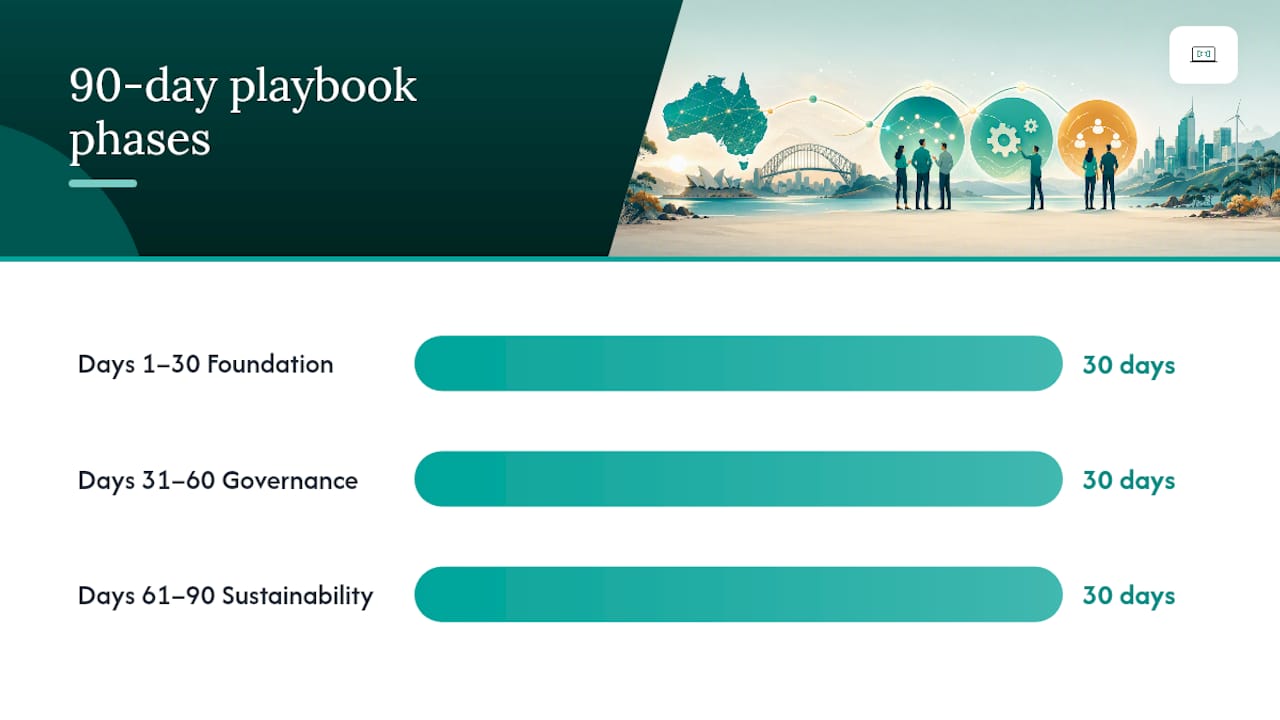
A 90-day SMB playbook for getting vendor management running
Most SMBs do not need a six-month programme. Ninety days is enough to go from no formal process to a functioning vendor governance practice.
Day 1–30: Build the foundation
- Audit all IT suppliers from finance records, email inboxes, and app stores.
- Create a vendor register (spreadsheet or ITSM supplier module) with: supplier name, service, contract end date, data access level, and assigned owner.
- Tier suppliers as strategic, tactical, or commodity based on criticality and data access.
- Set calendar alerts for all renewals within the next 12 months.
- Identify your top three critical suppliers and schedule a review meeting with each.
Day 31–60: Add governance structure
- Map each critical supplier's SLA to your internal service targets.
- Confirm data-handling obligations and NDB notification clauses in existing contracts.
- Establish a review cadence: monthly for strategic, quarterly for tactical, annual for commodity.
- Link supplier IDs to your ITSM ticketing system so incidents can be attributed.
- Run a SaaS audit and cancel or consolidate unused licences.
Day 61–90: Make it sustainable
- Conduct your first formal supplier review for each strategic supplier.
- Build a simple executive dashboard: SLA adherence, spend vs budget, open risk items.
- Document your offboarding process for at least one supplier as a template.
- Schedule a quarterly vendor management review as a recurring calendar event.
- Brief your cross-functional team (IT, procurement, security, finance) on their roles.
Role assignments for SMBs:
| Role | Owner | Key task |
|---|---|---|
| Vendor register | IT lead | Maintain and update monthly |
| Contract management | Procurement or CEO | Renewals, terms, penalties |
| Security / compliance review | IT lead or external adviser | Risk rating, NDB obligations |
| Spend tracking | Finance | Monthly reconciliation against budget |
| Supplier performance | IT lead | Incident attribution, SLA reporting |
For startup vendor selection, the same 90-day structure applies, with the evaluation stage weighted more heavily in the first 30 days.
What are the most common vendor management pitfalls?
The failures are predictable. Knowing them in advance means you can build the mitigation into your process from the start.
Fragmented registers. When vendor data lives in three spreadsheets, an email thread, and someone's memory, no single person has the full picture. The fix is a single authoritative register, even if it starts as a simple spreadsheet.
No named owner. A supplier with no assigned owner gets reviewed by nobody. Contracts auto-renew, performance drifts, and the first signal of a problem is usually an outage. Assign an owner at the point of onboarding, not after something goes wrong.
Misunderstood SLAs. Many organisations sign SLAs without mapping them to internal service targets. Ungoverned suppliers commonly cause outages and missed SLAs; without that mapping, you cannot attribute a breach or claim a service credit. Read the SLA, map it to your internal targets, and document the gap before signing.
Unmanaged SaaS. Automatic renewals and decentralised adoption mean SaaS licences accumulate without oversight. A quarterly SaaS audit is the minimum control.
Poor change notifications. Suppliers change pricing, data residency, or service terms without adequate notice. Require a minimum 30-day written notification clause in every contract.
Red flags that a supplier relationship needs escalation or offboarding:
- Repeated SLA breaches with no credible remediation plan
- Unresponsive account management or support escalation paths
- Undisclosed changes to data handling or subprocessors
- Security incidents the supplier did not proactively notify you about
Pro Tip: When a supplier relationship starts showing red flags, document everything in writing before escalating. A paper trail of missed SLAs, unanswered emails, and undisclosed changes is what gives you leverage to exit a contract early or negotiate a remedy.
Strategic partner or transactional supplier: how do you decide?
Not every supplier deserves the same governance investment. The distinction between a transactional supplier and a strategic partner determines how much time, executive attention, and contractual rigour you apply.
Transactional suppliers deliver a defined, replaceable service. Think commodity SaaS tools, hardware resellers, or a single-service connectivity provider. Governance is light: an annual review, a standard contract, and a renewal alert.
Strategic partners are deeply integrated into your operations or product. They might co-develop features with you, hold exclusive access to sensitive data, or underpin a service you cannot easily replicate with another provider. AWS, Azure, or Google Cloud often sit in this category for cloud-native businesses. So does a managed security provider with access to your network.
The signals that justify moving a supplier to partner governance:
- They hold or process sensitive personal data at scale
- Switching them would take more than three months and significant cost
- You are jointly developing roadmap items or integrations
- Their failure would directly breach your own SLAs to customers
When you upgrade a supplier to partner governance, the practical steps are: replace generic SLA targets with joint KPIs, assign an executive sponsor on both sides, schedule quarterly business reviews, and add a security audit to the annual renewal process. The relationship changes from procurement to collaboration, and the contract should reflect that.
How do you report vendor management ROI to executives?
The challenge with vendor management is that its value is often invisible until something goes wrong. The reporting job is to make the prevented failures and cost savings visible before the crisis.
A simple ROI framing uses three categories:
- Cost avoided: licence consolidation savings, penalty credits recovered, avoided emergency procurement costs.
- Downtime reduction: hours of outage prevented by proactive supplier reviews, multiplied by your estimated cost per hour of downtime.
- Licence optimisation: unused licences cancelled or right-sized after a SaaS audit.
For board-level reporting, a one-page summary works better than a detailed operational report. Structure it as: three to five KPIs with trend arrows, one notable win (a renegotiated contract, a recovered SLA credit, a risk item closed), and one open risk item with a mitigation plan. That format takes five minutes to read and answers the questions executives actually ask.
Pro Tip: Translate every metric into dollars where you can. 'That improvement recovered $12,000 in service credits and prevented two incidents that would have cost an estimated four hours of downtime' is a conversation that gets budget approved.
How should you engage stakeholders during the vendor lifecycle?
Vendor management fails quietly when it is treated as an IT-only function. The people who need to be involved change at each lifecycle stage, and keeping them informed at the right moment prevents the most common coordination failures.
During supplier evaluation, involve security and compliance early, not at the point of contract signature. A security review that kills a deal after three weeks of negotiation wastes everyone's time. Build the security assessment into the evaluation scorecard from the start.
During onboarding, brief the operational teams who will work with the supplier daily. They are the first to notice when service quality drops, and they need to know who to contact and how to log a complaint so it reaches the right owner.
During performance reviews, include finance and the business unit that depends on the service. A review that only involves IT and the supplier misses the commercial and operational perspective that makes the conversation meaningful.
For major contract renewals or supplier changes, brief senior leadership before the decision is made, not after. A one-paragraph summary of the options, the recommended path, and the cost implication is enough. Nobody wants a surprise at the board level about a critical supplier change.
Contract negotiation tips that actually protect you with IT vendors
Most IT vendor contracts are written by the vendor's legal team to protect the vendor. Your job in negotiation is to shift enough of that balance to protect your organisation without killing the deal.
Start with the SLA, not the price. Pricing is where vendors expect to negotiate. SLA terms, notification obligations, and termination clauses are where the real risk sits. Push hard on those first.
Insist on a data-handling schedule. Any supplier that touches personal information should sign a data-processing agreement that specifies data residency, encryption standards, retention periods, and what happens to your data on termination. This is not optional under the Privacy Act.
Cap liability at a meaningful level. Many vendor contracts cap their liability at one month of fees. For a critical supplier, that is not enough. Negotiate the cap to at least 12 months of fees, or to the actual cost of a foreseeable incident.
Build in a benchmarking right. For multi-year contracts, include a clause that allows you to benchmark pricing against the market at the midpoint of the term. Vendors who are confident in their pricing will accept it.
Require change notification in writing. Verbal assurances about pricing stability or service continuity are worthless. The contract should require written notice for any material change, with a minimum 30-day lead time. For managing IT vendor contracts, a contract checklist built around these clauses is the fastest way to protect your position.
What emerging trends are reshaping IT vendor management?
Automation is the most immediate shift. Vendor management platforms are adding workflow automation for contract renewals, compliance checks, and SLA breach alerts. Tasks that previously required a human to remember a date or pull a report are becoming system-triggered. For Australian SMBs, this means the overhead of running a vendor governance process is dropping.
AI-based monitoring is moving from enterprise-only to accessible. Platforms are beginning to use machine learning to flag anomalous supplier behaviour, predict SLA risk based on incident trends, and surface licence waste automatically. The practical benefit for a small team is that the system does the pattern recognition that previously required an experienced analyst.
Supply-chain security is getting sharper regulatory attention globally, and Australian organisations are not exempt. The expectation that you know your suppliers' security posture, not just your own, is becoming a baseline for enterprise procurement and government contracts.
Multi-cloud governance is a growing complexity. As organisations spread workloads across AWS, Microsoft Azure, and Google Cloud simultaneously, vendor management needs to account for the interdependencies between those platforms, not just each one in isolation.
Finally, the shift toward outcome-based contracts is accelerating. Rather than specifying inputs and uptime percentages, more sophisticated buyers are negotiating contracts that tie supplier payment to business outcomes. That model requires stronger performance data and a more mature vendor management practice to enforce.
What does it cost and how long does it take to implement vendor management?
For an SMB with 10–30 suppliers, the initial effort to build a functioning vendor management practice is roughly 20–40 hours of internal time across IT, procurement, and finance. That covers the vendor audit, register build, tier classification, SLA mapping, and first round of supplier reviews. Most of that work happens in the first 30 days of the 90-day playbook above.
Tooling costs vary. GLPI is open source and free to self-host, with paid support options. InvGate and similar ITSM platforms with supplier modules typically charge per agent or per asset, with pricing available on request for Australian deployments. A dedicated enterprise VMS adds cost but is rarely necessary below 50 suppliers.
The recurring effort to maintain a vendor management practice, once established, is modest: roughly two to four hours per month for a small portfolio, covering SLA reporting, incident attribution, and renewal tracking. Quarterly supplier reviews add another two to four hours per strategic supplier per quarter.
The cost of not having a process is harder to quantify but consistently higher. A single missed renewal that locks you into an unfavourable contract for another year, or a supplier breach that triggers NDB notification obligations you were not prepared for, typically costs more than the entire annual effort of running a proper governance process.
Why small Australian businesses should treat vendor management as strategic
Most small businesses treat vendor management as paperwork. That framing is the problem.
Your IT suppliers are not just cost lines. They are the infrastructure your business runs on. When your cloud provider has an outage, your team stops working. When your payroll software vendor has a breach, you have a Privacy Act obligation to manage. When your managed services provider fails to deliver, your customers feel it before you do.
The organisations that handle these moments well are not the ones with the biggest IT teams. They are the ones that built a simple, consistent governance process before the crisis. A vendor register, a named owner, a mapped SLA, and a renewal calendar are not bureaucracy. They are the minimum viable controls that let you respond to a supplier failure in hours rather than days.
From a practical standpoint, the ITIL 4 Supplier Management practice gives Australian organisations a proven framework to build on, without requiring a large team or expensive tooling. The 90-day playbook in this guide is designed to get a small team to a working practice with realistic effort. The compliance layer, the Privacy Act, the NDB scheme, the supply-chain security expectations, is not going away. Building the governance practice now is cheaper than building it after an incident.
Myitbutler handles the vendor coordination so you can focus on your business
Running a vendor governance practice takes consistent attention: tracking renewals, reviewing SLAs, chasing suppliers on incidents, and keeping contracts aligned with your compliance obligations. For many Australian SMBs and distributed teams, that attention is exactly what is missing.

Myitbutler provides remote IT vendor liaison and managed IT services for Australian businesses and international teams, backed by over 15 years of enterprise experience and certifications including CCNA, CompTIA Security+, and PRINCE2. The service covers vendor register management, contract support, security checks at renewal, and ongoing supplier performance coordination, all delivered remotely with transparent fixed pricing and no lock-in contracts. There is no retainer commitment and no minimum term.
If your vendor portfolio has grown faster than your governance process, book a free chat and get a clear picture of where the gaps are and what it takes to close them.
Sources
- Supplier Management with GLPI — from procurement to strategic partnership
- IT Vendor Management: Processes, Activities, And Best Practices
- IT Vendor Management: govern suppliers and cut risk | ITDEVTECH
FAQ
What is IT vendor management?
IT vendor management is the structured process of selecting, contracting, governing, and offboarding IT suppliers to deliver consistent service, security, and value. It covers software vendors, cloud providers, hardware suppliers, managed service providers, and connectivity carriers.
What does an IT vendor manager do?
An IT vendor manager oversees supplier relationships across the full lifecycle: evaluating suppliers, negotiating contracts, monitoring SLA performance, managing incidents, and coordinating renewals. In smaller organisations, this role is typically shared across IT, procurement, and finance rather than held by a dedicated person.
What is the difference between a supplier and a strategic partner in IT?
A transactional supplier delivers a defined, replaceable service with light governance. A strategic partner is deeply integrated into operations, holds sensitive data, or would take significant time and cost to replace. ITIL 4 distinguishes the two because the governance investment for each is fundamentally different.
What is an IT vendor?
An IT vendor is any external organisation that supplies technology products or services to your business, including software companies, cloud providers, hardware resellers, managed service providers, and connectivity carriers.
Can a small business manage IT vendors without a dedicated tool?
Yes, a well-maintained spreadsheet is a valid starting point for a small supplier portfolio. As the portfolio grows past 15–20 suppliers, an ITSM platform with a supplier module such as GLPI or InvGate reduces manual effort and provides the incident attribution and renewal alerting that spreadsheets cannot automate.